
GST Registration

Concept:- Goods and Services Tax is a consolidated indirect tax policy that encompasses VAT, CST, Service Tax, Central Excise duty, Entertainment Tax, etc and is valid all over India with effect from 1st July 2017.

When to register for GST:- Mandatory to register under GST when annual turnover exceeds INR 40/20 lakh or supply goods and services inter-state or through E-commerce platform.

What are the GST tax rates:-Tax rates vary from 0% to 28% depends on the type of goods & nature of the services you are selling.

Input Tax Credit Availment:- Only business unit registered under GST can avail credit of tax paid at the time of purchase while filing GST returns.

Return Filing & Payment:-Every GST registrant requires to file three monthly/quarterly returns and One annual return. Requires paying tax every month.

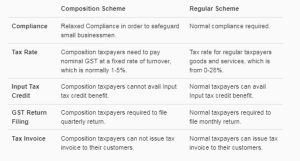
Composition Scheme:-Business Unit having an annual turnover less than INR 1.5 crore may opt the scheme. Requires to pay subsidize tax ranges from 1% to 5% & file quarterly return.

Turnover Criteria:- All taxpayers who have an annual turnover above ₹40 lakhs are required to get new GST registration.

Causal taxpayer:- If you supply goods or services in events/exhibitions where you do not have a permanent place of business, you need to get online GST Registration before starting a business. Such a dealer has to pay GST on the basis of an estimated turnover of 90 days. The validity of causal GST Registration is 90 days.

NRI taxpayer:- NRI taxpayer, who does not have a place of business in India, wishes to start a business, then he has to apply for GST Registration in India before beginning operations in India. The validity of a new GST registration is 90 days.

Agents of a supplier & Input service distributor:-  All Input service distributor who wants carry-forward benefit of input tax credit requires gst registration.

Reverse Charge:- A business who requires to pay tax under the reverse charge mechanism need GST Registration.

E-Commerce portal:- Every e-commerce portal (such as Amazon or Flipkart) under which multiple vendor’s selling their product requires gst registration.

GST registration not only helps you in getting your business recognized as a legal registrant but also opens a number of opportunities for your business. Benefits to GST registered business at glance are as follows:-

Become more competitive:- You will be more competitive in comparison to your unregistered competitors since you will carry valid tax registration.

Expand your business Online:- You cannot sell products or services on E-commerce platform without GST registration. If you’re planning to give a blow on E-commerce platform like Flipkart, Amazon, Paytm, Shopify or through your own website, you must need a GSTIN.

Can take input tax credit:-  Only Registered GST holders can avail input of GST tax paid on their purchases and save the cost.

Can sell all over India without any restrictions:- Without having GSTIN you cannot trade inter-state. This is possible only if you registered your business under GST.

Apply Government Tenders:- Various government tenders requires GSTIN to apply tender. If you don’t have, you may miss the business opportunity.

Open Current Bank Account:- Especially, in case of sole proprietor business Banks & Financial Institution does not open a current bank account in the name of business trade name unless you carry any government proof in the name of your business. GST registration certificate can help you to open a current bank account.

Dealing with MNCs:-  Generally, MNC’s does not get comfortable to deal with small business entities until they carry valid tax registration proof.

GSTIN is an abbreviation for Goods and Service Tax Identification Number. It consists 15 alphanumeric digits. This is generated by the Government after you have successfully completed GST registration.

#First 2 digit show state code.

#Next 10 digit indicates PAN Number.

#Next 1 shows serial number of gst registration in a state.

#Last 2 digits are random.

GST Composition Scheme is for the small taxpayers, which is framed to reduce the tax compliance burden. Small taxpayers need not to file monthly GST returns and they need to pay nominal GST at a fixed rate of turnover. Any business having an annual turnover up to ₹1.5 Crore can opt for GST registration under composition scheme.
  • 1

    Provide the required business details and information to our web portal.

  • 2

    Choose a package and pay online with different payment modes available.

  • 3

    On placing an order, your application will be assigned to one of our dedicated professionals.

  • 4

    Our professional shall carefully examine the correctness & accuracy of the documents and file GST application form.

  • 5

    Our professional shall make regular follow up with Government department for processing of GST application online.

  • 6

    On obtaining GSTIN, we will provide GST certificate along with several eGuides on GST and GST Invoicing Software.

1. PAN Card of the Business or Applicant:- GSTIN is linked to the PAN of the business. Hence, PAN is required to obtain GST certificate.

2. Identity and Address Proof of Promoters:- documents like PAN, passport, driving license, aadhaar card or voters identity card must be submitted for all the promoters.

3. Address Proof for Place of Business:- Documents like rental agreement or sale deed along with copies of electricity bill or latest property tax receipt or municipal khata copy must be submitted for the address mentioned in the GST application.

4. Bank Account Proof: Scanned copy of the first page of bank passbook showing a few transaction and address of the business must be submitted for the bank account mentioned in the registration application.


Rs. 1499 + Taxes
GST Registration
GST Invoice Template
Guidance on HSN/SAC Code
GST Tax Rate List
Rs. 2499 + Taxes
GST Registration
GST Invoice Guide
Guidance on HSN/SAC Code
GST Tax Rate List
MSME REGISTRATION
Rs. 7499 + Taxes
Free GST Registration
GST Return Annual Package
Guidance on HSN/SAC Code
GST Tax Rate List
GST E-Waybill Guide

Documents for GST Registration

PAN Card- A PAN card of the indivisual is required

Identity & Address Proof -Adhaar card , Voter Id , Passport can be used as identity proof

Business Address Proof -Identity proof of business is required where you want open your business such as Electricity Bill / Rent Agreement

Bank Account Proof - Bank passbook front page photo is required

GST Registration :BUSINESS REGISTERED ENTITY

What is GST (Goods and Services Tax)?

Introduced on July 1, 2017, GST is India’s landmark "One Nation, One Tax" reform. It is a comprehensive, multi-stage, destination-based tax that replaced various indirect taxes such as VAT, Service Tax, Central Excise, and Entertainment Tax, streamlining the Indian economy into a single market.


When is GST Registration Mandatory?

Staying compliant is crucial for business continuity. You must obtain a New GST Registration if you fall under any of the following categories:

  • Turnover Thresholds: * Goods Suppliers: Annual aggregate turnover exceeding ₹40 Lakhs.

    • Service Providers: Annual aggregate turnover exceeding ₹20 Lakhs.

  • Inter-State Trade: Mandatory for any business supplying goods or services across state borders (IGST applies).

  • E-Commerce Sellers: Essential for vendors selling through platforms like Amazon, Flipkart, or personal Shopify stores.

  • Casual Taxable Persons: Required for temporary businesses (e.g., exhibitions/events) without a permanent place of business.

  • Non-Resident Indian (NRI) Taxpayers: Mandatory for NRIs starting business operations in India (valid for 90 days).

  • Reverse Charge Mechanism (RCM): Businesses required to pay tax under RCM must register.

  • Input Service Distributors (ISD): For those looking to distribute Input Tax Credit (ITC) to branches.


Key Features of the GST Framework

1. GST Tax Rates

GST rates are categorized into five primary slabs—0%, 5%, 12%, 18%, and 28%—depending on the nature of the goods or services provided.

2. Input Tax Credit (ITC) Benefits

One of the biggest advantages of GST is the ability to claim Input Tax Credit. Registered businesses can reduce their tax liability by deducting the tax paid on business purchases from the tax collected on sales.

3. GST Composition Scheme

Small businesses with a turnover below ₹1.5 Crore can opt for the Composition Scheme. This allows for a lower, subsidized tax rate (1% to 5%) and simplified quarterly return filing, reducing the compliance burden.

4. Export Compliance

Exports are classified as "Zero-Rated Supplies." To claim refunds on input taxes and benefit from export incentives, GST registration is mandatory for all exporters.


Why Does Your Business Need GST Registration?

Beyond legal compliance, a GSTIN (GST Identification Number) acts as a catalyst for business growth:

  • Market Credibility: Gain a competitive edge over unregistered entities and build trust with MNCs and large corporate clients.

  • Digital Expansion: Unlock the doors to E-commerce. A GSTIN is a prerequisite for selling on Flipkart, Amazon, and other digital marketplaces.

  • Banking & Finance: A GST certificate is a primary document required by banks to open a Business Current Account or apply for corporate loans.

  • Government Opportunities: Qualify for lucrative Government Tenders that strictly require valid tax registrations.

  • Unrestricted Trade: Seamlessly move goods across state lines without the risk of legal penalties or logistics delays.


GST Compliance: Filing & Payments

Registered taxpayers are required to maintain a discipline of GST Return Filing. This typically involves:

  • Monthly/Quarterly Returns: Depending on the scheme (GSTR-1, GSTR-3B).

  • Annual Return: Consolidating the year’s transactions (GSTR-9).

  • Tax Payments: Monthly settlement of tax liabilities to ensure a high GST Compliance Rating.

Who Needs GST Registration? Key Business Scenarios Explained

Navigating GST compliance in India is essential for business growth. Whether you are a solo founder or a scaling enterprise, understanding your registration category is the first step toward legal security.

1. GST Registration for Sole Proprietorships

For individual business owners, GST acts as a badge of credibility.

  • Mandatory Threshold: Registration is required if your annual turnover exceeds ₹40 Lakhs (for Goods) or ₹20 Lakhs (for Services). Special category states maintain a ₹10 Lakhs limit.

  • The B2B Advantage: Even if you fall below the limit, Voluntary GST Registration allows you to issue Tax Invoices, claim Input Tax Credit (ITC), and compete for corporate contracts.

2. GST for Freelancers and IT Consultants

The modern gig economy is not exempt from tax regulations.

  • Service Threshold: Digital marketers, software developers, and consultants must register if their gross income exceeds ₹20 Lakhs.

  • Export of Services: If you serve international clients, your services are considered "Zero-Rated Supplies." Registering under GST allows you to claim refunds on tax paid for business assets (like laptops or internet).

3. GST for E-commerce Sellers (Amazon, Flipkart, etc.)

If you sell online, the rules change.

  • Zero Threshold Limit: GST registration is mandatory from day one for anyone selling via e-commerce marketplaces (Amazon, Meesho, etc.), regardless of turnover.

  • TCS Compliance: Online platforms are required to collect Tax Collection at Source (TCS), which you can only claim back if you have a valid GSTIN.

4. Understanding the GST Composition Scheme

Designed for small taxpayers, this scheme minimizes the "paperwork headache."

  • Eligibility: Available for businesses with a turnover up to ₹1.5 Crore.

  • Fixed Tax Rates: * Traders: 1%

    • Manufacturers: 2%

    • Service Providers: 6%

  • The Trade-off: Composition dealers cannot claim ITC and are restricted from making inter-state sales.


Post-Registration: Compliance & Filing Schedule

Once registered, filing regular returns is non-negotiable. Filings India provides CA-assisted support to ensure you never miss a deadline.

Return TypeWho Files It?Frequency
GSTR-1All Regular TaxpayersMonthly / Quarterly (QRMP)
GSTR-3BAll Regular TaxpayersMonthly
CMP-08Composition DealersQuarterly
GSTR-9Businesses > ₹2 Cr TurnoverAnnually

Penalties for Non-Compliance

Delaying your filings is a costly mistake. The GST late fee structure is as follows:

  • Regular Returns: ₹50 per day of delay (capped at specific limits).

  • Nil Returns: ₹20 per day of delay.

  • Interest: 18% per annum on any outstanding tax liability.

  • Risk: Continuous default can lead to the cancellation of your GSTIN, halting your business operations entirely.


Why Choose Filings India?

Managing GST can be complex. From New GST Registration to Monthly Return Filing, we offer end-to-end solutions so you can focus on scaling your brand while we handle the taxman.

Get started with your GST Registration today!

Connect With Us

Copyright © 2023 Filing India, All Rights Reserved.