
Trademark Registration: Fast-Track Your Application Online
Protect Your Intellectual Property with Filings India. Safeguard your business identity with the leading trademark registration services in India. From trademark public search to final certification, our specialists ensure your brand name and slogan are fully protected under the Trade Marks Act. Experience a hassle-free, digital-first approach to brand registration.

Protect Your brand
Get Yourself Registered
Build your own Brand
Trademark Registration Online in India
· Government-Certified IP Experts: Your filing is handled by registered trademark attorneys and IP India consultants.
· Expedited TM Filing & Registration: Swift application processing to get your “TM” mark and official trademark certificate faster.
· Expert Trademark Objection Reply: specialized legal support for examination reports, third-party oppositions, and hearings.
· Trusted by 50,000+ Indian Startups: Join a community of thousands who have secured their Intellectual Property with us.
What is Trademark Registration In India ?
Trademark Registration in India is the most effective way to secure your brand identity and gain exclusive ownership over your business name, logo, or slogan. By obtaining a registered trademark, you legally distinguish your products and services from competitors, preventing unauthorized use by third parties.
In the Indian market, the ™ symbol serves as a notice of a pending application, while the registered symbol (®) can only be used once the Trademark Registry grants official approval. As a valuable intangible asset, a trademark provides long-term legal protection and builds consumer trust. Because the online trademark filing process involves complex stages—including trademark public search, Vienna codification, and government examination—it is highly recommended to seek expert legal consultation.
Filings India specializes in end-to-end IPR services, helping thousands of startups and established companies navigate the trademark registration procedure with ease.

Eligibility for Trademark registration
Who is eligible to obtain trademark registration in India?
Trademark registrations are widely used to protect the brand or slogans or coined words that are unique. Trademark registrations in India can be obtained by individuals or businesses or by non-profit organizations. However, each of the different class of persons or entity that have different requirement while filing the trademark application. The following are eligible for obtaining trademark registration in India.
1. Individual Applicants (Sole Person)
An individual can apply for a trademark even if they do not currently own a business. You can register a brand name or symbol as a “proposed to be used” mark, securing your rights for future commercial ventures.
2. Joint Ownership
When two or more individuals collaborate on a brand, the trademark application must clearly state the names of all joint owners. This ensures that the legal rights to the mark are shared equally among all parties.
3. Proprietorship Firms
In the eyes of the law, a proprietorship is not a separate legal entity. Therefore, when filing for a proprietorship trademark, the application must feature the full legal name of the individual proprietor, rather than just the business or “trading as” name.
4. Partnership Firms
For partnerships, the application must list the names of all active partners.
Special Note: If a minor is a beneficiary in the partnership, the name of the guardian representing the minor must be included in the legal documentation.
5. Limited Liability Partnership (LLP)
Unlike traditional partnerships, an LLP is an incorporated body with its own legal identity. In this scenario, the trademark application must be filed in the name of the LLP, not the individual partners. The brand assets belong to the entity itself.
6. Indian Companies (Pvt Ltd, OPC, & Public Ltd)
Registered companies like Private Limited, One Person Companies (OPC), or Public Limited Companies must file applications in the company’s corporate name.
Authority: While a Director or authorized officer signs the documents, they act only as representatives; the company remains the legal owner of the trademark.
7. Foreign Entities
Foreign companies looking to protect their brand in the Indian market must apply using their registered corporate name as it appears in their home country. The application must specify the nature of the entity, the country of incorporation, and the governing laws under which it operates.
8. Trusts and Societies
When a trademark is registered for a Trust or a Society, the application should identify the Managing Trustee, Chairman, or Secretary who is legally authorized to represent the organization.
Types of Trademark registration in India
In the competitive Indian market, Intellectual Property (IP) is a business’s most valuable asset. While the primary goal of any trademark is to help consumers distinguish your brand from others, the Trademark Act of 1999 recognizes several specialized categories. Understanding these helps you choose the right protection for your brand identity.
1. Product Mark (Goods Registration)
A Product Mark is specifically designed for physical goods. It establishes the origin of the product and helps businesses build and maintain a solid market reputation. Any application filed under Trademark Classes 1 to 34 is categorized as a Product Mark, protecting everything from pharmaceuticals to consumer electronics.
2. Service Mark (Intangible Assets)
Unlike physical goods, a Service Mark represents intangible offerings. It distinguishes your business from competitors in the service industry. Applications filed under Trademark Classes 35 to 45 (such as hospitality, IT, or healthcare) are classified as Service Marks, ensuring your professional brand remains unique.
3. Collective Mark (Association Protection)
A Collective Mark is used by a group, association, or organization (such as a Section 8 Company or a trade union) to represent its members. It informs the public about specific characteristics shared by the group’s products or services. This mark is owned by the association, which monitors its use by individual members to ensure collective brand standards.
4. Certification Mark (Quality Assurance)
A Certification Mark is a “seal of quality.” It indicates that a product has met specific standards regarding its material, origin, or manufacturing process. Typically found on electronics and food products (like ISI or Agmark), these marks build immense consumer trust by guaranteeing that the product has passed rigorous quality tests.
5. Shape Mark (3D Trademarks)
When the physical form of a product is so unique that it becomes synonymous with the brand, it can be registered as a Shape Mark. To be eligible, the shape must be distinctive and non-functional, ensuring that customers can identify the manufacturer just by looking at the product’s silhouette or packaging.
6. Pattern Mark (Design Distinctiveness)
A Pattern Mark protects a specific, repeating design that serves as a brand’s signature. For a pattern to be registered, it must be remarkably unique and immediately recognizable to the consumer. Common in the luxury goods and textile industries, these marks prevent others from “copying the look” of your brand.
7. Sound Mark (Audio Branding)
In the digital age, Sound Marks (or audio mnemonics) have become a powerful branding tool. These are unique melodies or sounds associated with a brand, often heard in commercials or app startups. A famous example in India is the IPL theme tune. To be registered, the sound must be graphically representable through musical notations.
Trademark Registration Documents Checklist for India 2026
What are the documents required for obtaining a trademark registration in India?
Essential Documents for Trademark Filing in India:
Proof of Identity & Address: Valid KYC documents of the applicant, such as an Aadhaar Card, PAN Card, or Passport.
Business Constitution Documents: For incorporated entities, a Certificate of Incorporation (Private Limited or LLP) or a Partnership Deed is mandatory.
MSME/Udyam Registration: Highly recommended for small businesses to avail of a 50% subsidy on government filing fees.
Brand Representation: A high-resolution image of your brand logo (if applicable). If you are registering a brand name, a wordmark will suffice.
User Affidavit: If the trademark has been in use prior to the application date, an affidavit with documentary evidence of use (invoices, website links, etc.) must be submitted.
Authorization (Form TM-48): A signed Power of Attorney allowing a Trademark Attorney or agent to represent your case before the Trademark Registry.
Procedure for Trademark Registration
How to obtain Trademark registration in India?
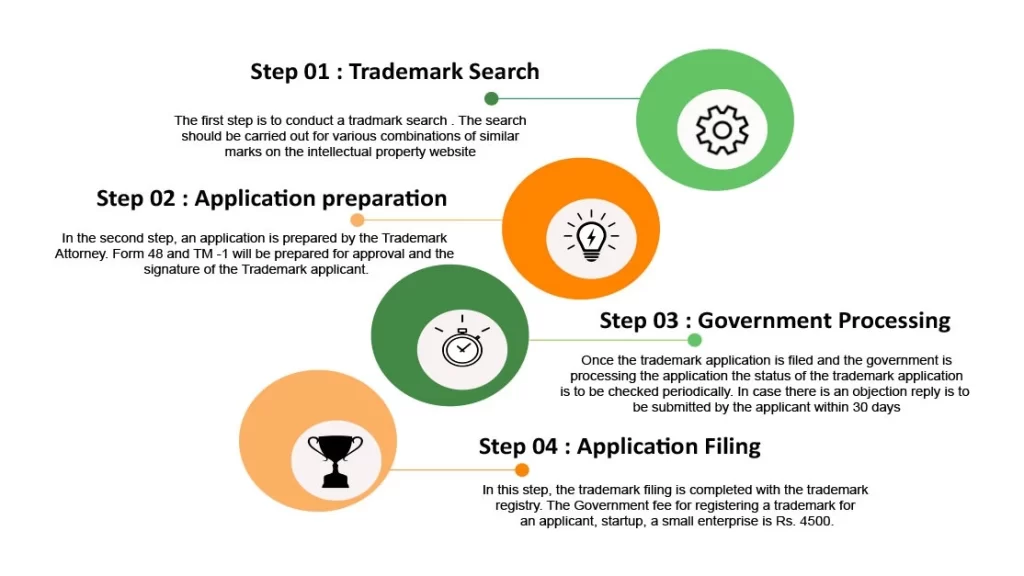
Here we have a simplified process of obtaining a trademark registration in India.
Benefits of getting Trademark registration
Why is it necessary to obtain a Trademark registration?
There are several reasons to get a trademark registration but most are necessary for all the companies and the willing entrepreneurs as it acts as an important asset for the company. There are many advantages of getting a trademark registration and utilizing the services. Here are some advantages.
Intellectual Property Protection
Trademark registration provides legal protection against the misuse or copy of the company’s name or registered logo. The owner of the trademark receives ownership of the trademark which can be legally upheld in any court. Registering a trademark lets the owner of the trademark receive nationwide ownership of the mark which can be legally upheld in any court.
A trademark registration grants an official notice that the trademark is already owned.
Powerful Deterrent
A trademark owner obtains the right to publicly advertise the brand as a registered trademark that alerts others and forestalls the defense of the innocent infringement. Once the trademark is registered the trademark will appear in the search reports that will discourage the other applicants from proceeding with the same or similar mark registration.
If you are the first one to register a Trademark then the National Trademark office in New Delhi will refuse the registration to any trademark which seems confusingly to any other such Trademark.
Legal Remedies
By getting a Trademark registration in India the owner of the trademark can recover up to triple damages from the infringer. The owner receives the presumption of being the valid owner of the mark. Registering a trademark gives the owner a right to sue anyone who is misusing the mark to sue in any court. An unregistered Trademark on the other hand is open to suits
TRADEMARK CLASSES
Class | Industry / Category | Product & Service |
1 | Industrial Chemicals | Raw chemicals, adhesives, fertilizers, unprocessed plastics. |
2 | Paints & Coatings | Varnishes, lacquers, anti-rust oils, pigments, dyes. |
3 | Cosmetics & Beauty | Skincare, soaps, perfumes, essential oils, cleaning agents. |
4 | Oils & Lubricants | Industrial greases, motor fuels, candles, wicks for lighting. |
5 | Pharmaceuticals | Medicines, baby food, dietary supplements, disinfectants. |
6 | Metal Hardware | Steel pipes, metal building materials, safes, locks, alloys. |
7 | Heavy Machinery | Industrial engines, machine tools, agricultural equipment. |
8 | Hand Tools | Cutlery, razors, hand-operated gardening tools, scissors. |
9 | Tech & Electronics | Mobile apps, software, computers, AI devices, cameras. |
10 | Medical Devices | Surgical instruments, artificial limbs, dental apparatus. |
11 | Appliances | Lighting, geysers, air conditioners, sanitary installations. |
12 | Vehicles | Cars, bicycles, drones, electric vehicles (EVs), boats. |
13 | Firearms | Ammunition, explosives, fireworks, projectiles. |
14 | Jewelry & Watches | Precious metals, diamonds, clocks, horological items. |
15 | Musical Instruments | Guitars, pianos, electronic keyboards, music stands. |
16 | Stationery & Paper | Printed books, office supplies, packaging materials. |
17 | Rubber & Plastics | Insulation, flexible pipes, semi-processed plastics. |
18 | Leather Goods | Handbags, wallets, luggage, umbrellas, leather straps. |
19 | Construction (Non-Metal) | Cement, bricks, non-metal rigid pipes, asphalt. |
20 | Furniture | Mirrors, picture frames, home/office furniture, mattresses. |
21 | Houseware | Kitchen utensils, glassware, cleaning brushes, combs. |
22 | Ropes & Textiles | Tents, sails, nets, sacks, raw fibrous materials. |
23 | Yarn & Thread | Cotton threads, wool yarns, embroidery threads. |
24 | Fabrics & Linens | Bed covers, curtains, towels, textile substitutes. |
25 | Clothing & Fashion | Apparel, footwear, headgear, t-shirts, belts. |
26 | Lace & Embroidery | Ribbons, buttons, artificial flowers, hair ornaments. |
27 | Floor Coverings | Carpets, mats, rugs, linoleum, wall hangings. |
28 | Toys & Games | Video games, sports equipment, fitness gear, dolls. |
29 | Dairy & Meats | Edible oils, milk, butter, processed fruits, pulses. |
30 | Staple Foods | Coffee, tea, spices, bakery products, flour, snacks. |
31 | Raw Agriculture | Fresh fruits, vegetables, seeds, live animals, grains. |
32 | Beverages (Soft) | Fruit juices, mineral water, energy drinks, soft drinks. |
33 | Alcoholic Beverages | Wine, spirits, liquors (excluding beer). |
34 | Tobacco Products | Cigarettes, matches, vapes, electronic cigarettes. |
35 | Business & Retail | E-commerce portals, marketing, HR, retail stores. |
36 | Finance & Real Estate | Banking, insurance, stockbroking, property leasing. |
37 | Construction & Repair | Building installation, maintenance, vehicle repair. |
38 | Telecommunications | Internet services, broadcasting, mobile networking. |
39 | Logistics & Travel | Transport, warehousing, courier services, tours. |
40 | Material Treatment | Recycling, printing, custom manufacturing, refining. |
41 | Education & Media | Online courses, coaching, events, publishing, films. |
42 | IT & Scientific | SaaS, cloud computing, web design, R&D. |
43 | Hospitality | Restaurants, cafes, hotels, guest houses, catering. |
44 | Medical & Beauty | Hospitals, salons, spa services, farming, therapy. |
45 | Legal & Social | Law firms, security services, dating apps, matchmaking. |
"Secure Your Brand's Future: Everything You Need to Know Before Trademark Registration."
In the digital era, securing your brand has never been easier. With the shift toward Online Trademark Filing, businesses can now protect their intellectual property from the comfort of their office. Filingsindia.in has been a pioneer in this space, assisting thousands of Indian startups and corporations in navigating the legal complexities of brand registration.
1. Conduct a Comprehensive Trademark Search
Before you apply, performing a Trademark Availability Search is a mandatory first step. This process involves scanning the official IP India database to ensure your proposed brand name or logo doesn’t conflict with existing registered marks. A proactive search prevents legal disputes and increases the chances of a successful application.
2. Filing the Trademark Application (E-Filing)
Once you’ve confirmed your name is unique, the next step is Trademark E-filing. You can submit your application through the Controller General of Patents, Designs, and Trademarks. To ensure your application is “Defect-Free,” it must include:
- The Mark: A high-resolution copy of your logo or brand name.
- Applicant Details: Full name and registered address of the owner.
- User Date: The date you first started using the mark (User Affidavit).
- Goods/Services Description: A clear list of products or services under the relevant Trademark Class.
3. The Vienna Codification Process
If your trademark contains visual or figurative elements (like a logo), it undergoes Vienna Codification. This is an international standard established by the Vienna Agreement to classify the symbolic parts of a mark. During this stage, your application status will typically show as “Sent for Vienna Codification” while the registry indexes your logo’s design elements.
4. Trademark Examination & Response
After codification, a Trademark Examiner reviews your application for compliance with the Trademarks Act, 1999. If the officer finds issues, they will issue a Trademark Examination Report citing objections (often under Section 9 or Section 11).
- The Solution: You must file a professional response to the objection. If the examiner is satisfied with your justification, the mark moves forward. If not, you have the right to a show-cause hearing or an appeal.
5. Trademark Journal Publication
An accepted application is “Advertised” in the Trademark Journal, a weekly public record. This stage allows the public 4 months (120 days) to file a Trademark Opposition if they believe your mark infringes on their rights.
- Opposition Proceedings: If someone opposes your mark, a legal hearing is conducted where both parties present evidence. The Hearing Officer then decides whether to allow or refuse the registration.
6. Grant of Trademark Registration Certificate
If no one opposes your mark within the statutory period, the registry proceeds to the final step: Trademark Registration. The registry issues a formal Registration Certificate, officially granting you the exclusive legal right to your brand. At this point, you can proudly transition from the ™ symbol to the ® Symbol, signaling to the world that your brand is a legally protected asset.
Trademark Registration FAQ's
1. Who should apply for Trademark Registration?
Every entrepreneur, startup, and established business should apply for trademark registration to protect their unique identity. Any word, logo, slogan, or color combination that distinguishes your products from competitors can be registered. Brand protection starts with ensuring your “mark” is legally yours.
2. What are the grounds for Trademark Rejection?
A trademark cannot be registered if it is deceptive, offensive, or similar to an existing brand. Furthermore, generic terms (e.g., “Apple” for a fruit shop), geographical names, or common trade abbreviations are usually rejected because they lack distinctiveness.
3. How do I choose the right Trademark Class?
The Trademark Registry uses the NICE Classification, which divides goods and services into 45 distinct classes. Classes 1–34 are for goods, while 35–45 cover services. Selecting the correct class is vital; filing in the wrong one can leave your brand vulnerable to trademark infringement.
4. Does an Indian Trademark provide International Protection?
No, trademark rights are territorial. A registration in India only protects your brand within India. To protect your brand globally, you must file separate applications in each country or use the Madrid Protocol for international trademark filing.
5. Can NRIs or Foreign Companies register a brand in India?
Yes. Foreign entities and Non-Resident Indians (NRIs) can file for trademark registration in India. They must provide a local address for service, which is usually handled by an authorized trademark attorney or agent.
6. What is the timeline for Trademark Registration in 2026?
While you can file an application and get an acknowledgment within 24 hours, the entire process—including examination and publication in the Trademark Journal—usually takes 6 to 18 months, depending on whether the registry raises any objections.
7. When can I legally use the ™ symbol?
You can use the ™ symbol immediately after receiving the Trademark Filing Receipt. It signals to the public that you have applied for the mark and are claiming ownership, even while the application is “Pending.”
8. What is the difference between the ™ and ® symbols?
The ™ symbol is used for unregistered or pending marks. The ® symbol (Registered) can only be used once the Trademark Office issues a Registration Certificate. Using the ® symbol without a valid registration is a punishable offense under the Trademarks Act.
9. How long does a Trademark Registration last?
A registered trademark is valid for 10 years from the date of application. To ensure continuous Intellectual Property (IP) protection, you must file a Trademark Renewal application every 10 years.
10. What should I do if my Trademark Application is Objected?
If an examiner raises an objection (e.g., under Section 9 or 11), you must file a written response within 30 days. Failure to respond or provide a convincing legal argument will result in the application being “Abandoned.”
11. What are the primary functions of a Trademark?
A trademark serves as a badge of origin, guarantees consistent quality to consumers, and acts as a powerful marketing tool. It allows businesses to build brand equity and prevents others from profiting off your reputation.
12. Why is a Trademark Search important before filing?
Conducting a Public Search on the IP India portal is crucial to see if a similar mark already exists. A thorough search minimizes the risk of legal disputes and saves money on filing fees for marks that are likely to be rejected.
13. What details are required for the Trademark Application?
To file, you need the soft copy of the logo, the name and address of the applicant, a “User Affidavit” (if the mark is already in use), and a clear description of the goods or services.
14. What documents are needed for Trademark Filing in India?
Identity Proof: Aadhaar, PAN, or Passport of the applicant.
Business Proof: Incorporation certificate or Partnership deed.
Small Enterprise Status: Udyam Registration (to avail 50% discount on government fees).
Power of Attorney: Form 48 to authorize your representative.
15. What are the government fees for Trademark Registration?
The government fee varies based on the applicant type. For Individuals, Startups, and Small Enterprises (MSME), the fee is generally lower (₹4,500 for e-filing), while for Companies/Large Entities, the fee is higher (₹9,000 per class).
16. What are the legal benefits of a Registered Trademark?
Registration provides exclusive rights to use the mark and allows you to sue for Trademark Infringement. It is also an intangible asset that can be sold, licensed (franchising), or used as collateral for loans.
