

In India’s rapidly growing agribusiness landscape—from organic farm-to-table startups to large-scale seed producers—protecting your brand identity is no longer optional. If you deal in fresh produce, seeds, or livestock, Trademark Class 31 is your primary legal shield.
This guide breaks down everything you need to know about registering under Class 31, what it covers, and why it is vital for your business.
What is Trademark Class 31?
Trademark Class 31 is a specific category under the Nice Classification, an international system managed by the World Intellectual Property Organization (WIPO). In India, this class is dedicated to unprocessed agricultural, horticultural, and forestry products, as well as live animals and animal feed.
Essentially, if your product is in its natural, raw, or “live” state and hasn’t been industrially processed for consumption, it likely belongs here.
Comprehensive List of Goods in Class 31
To ensure your brand is fully protected, it is important to know the specific items included:
- Fresh Produce: All fresh fruits, vegetables, and herbs (e.g., apples, tomatoes, basil).
- Grains & Seeds: Unprocessed cereals (wheat, barley, maize) and seeds for planting.
- Live Animals: Livestock (cattle, poultry, sheep), bees, and even live fish/seafood.
- Plants & Flowers: Natural plants, seedlings, saplings, and fresh-cut flowers.
- Animal Foodstuffs: Raw animal feed, fodder, hay, and pet food (unprocessed).
- Forestry Products: Raw barks, unsawn timber, and bamboo.
Key Benefits of Registering Under Class 31
Registering your trademark in India offers more than just a symbol (™ or ® ); it builds a foundation for business growth.
- Exclusive Brand Rights: Prevents competitors from using similar names or logos that could confuse your customers
- Consumer Trust: In the agricultural market, a registered trademark signals quality, reliability, and authenticity.
- Legal Enforcement: Provides the legal standing to take action against counterfeiters or infringers.
- Business Asset: A registered trademark is an intangible asset that can be licensed, franchised, or sold, increasing your company’s valuation.
- Market Expansion: Facilitates smoother entry into export markets and new product lines.
Common Exclusions: What is NOT in Class 31?
A common mistake is filing in Class 31 for products that have been processed.19 To avoid application rejection, note these exclusions:
| Product Type | Correct Trademark Class |
| Processed/Packaged Foods (Canned fruit, dried veg) | Class 29 |
| Processed Grains/Flour (Rice, pasta, spices) | Class 30 |
| Beverages (Fruit juices, sodas, alcohol) | Class 32 or 33 |
| Medicinal Plants (Herbal supplements) | Class 5 |
| Chemicals/Fertilizers (Pesticides, plant food) | Class 1 |
How to Register Your Brand in Class 31
The registration process in India follows a structured path:
- Trademark Search: Conduct a thorough search to ensure your brand name is unique within Class 31.
- Filing the Application: Submit Form TM-A with the Indian Trademark Registry.
- Examination: A government examiner reviews the application for potential conflicts.20
- Publication: If approved, the mark is published in the Trademark Journal for public opposition.
- Registration: If no oppositions arise within 4 months, you receive your Registration Certificate, valid for 10 years.
Secure Your Agricultural Brand Today
Whether you are a local farmer or a global agribusiness, your brand is your reputation. Protecting it under Trademark Class 31 ensures that your hard work remains legally yours.
📋 Comprehensive List of Products (Class 31)
1. Raw Agricultural & Forestry Products
This category covers goods in their most natural state, directly from the earth or sea.
- Unprocessed Grains: Wheat, corn, barley, oats, and raw cereals.
- Raw Timber: Undressed and unsawn timber, logs, and wood chips for wood pulp.
- Natural Resources: Raw barks, cork, and seaweed/algae for human or animal consumption.
2. Horticulture & Gardening
Essential for nurseries, florists, and seed companies.
- Live Plants: Succulents, shrubs, bushes, and fruit-bearing plants.
- Flowers: Fresh-cut flowers, natural floral arrangements, and decorative wreaths.
- Propagation Material: Flower bulbs, seedlings, and seeds for planting.
3. Fresh Produce (Unprocessed)
This is for items that haven’t been cooked, canned, or frozen.
- Vegetables: Fresh potatoes, onions, garlic, herbs, and leafy greens.
- Fruits & Nuts: Fresh berries, citrus fruits, raw cocoa beans, and unprocessed nuts (almonds, hazelnuts).
- Fungi: Fresh mushrooms and truffles.
4. Livestock & Aquaculture
Anything living and intended for farming, breeding, or as pets.
- Farm Animals: Live cattle, sheep, poultry, and horses.
- Seafood: Live fish, crustaceans (lobsters, shrimp), and mollusks (oysters, mussels).
- Insects: Silkworms and silkworm eggs.
5. Animal Foodstuffs & Bedding
Focuses on the nutrition and care of animals.
- Animal Feed: Fodder, forage, bird food, and strengthening animal forage.
- Pet Care: Edible chews for animals, beverages for pets, and aromatic sand (litter).
- Bedding: Straw mulch, litter peat, and hay.
| Sowing & Propagation | Commercial vegetable seeds, flower bulbs, cereal seeds for planting, and hybrid seedlings. |
| Fresh Produce (Unprocessed) | Organic apples, bananas, vine-ripened tomatoes, leafy greens, and exotic berries. |
| Raw Grains & Cereals | Unprocessed rice, harvested wheat, field corn, barley, and raw oats. |
| Livestock & Aquaculture | Live cattle, poultry, sheep, honeybees, breeding horses, and live fish/crustaceans. |
| Horticulture & Floristry | Ornamental plants, garden shrubs, fruit-bearing saplings, and fresh-cut flowers. |
| Raw Roots & Fungi | Fresh herbs, unprocessed culinary spices, wild mushrooms, truffles, and tubers. |
| Natural Botanicals | Raw turmeric, ginger root, peppercorns, and green cardamom pods. |
| Forestry & Timber | Live trees, reforestation saplings, ornamental shrubs, and unsawn timber. |
| Natural Harvests | Raw nuts (unshelled), green legumes, and unprocessed agricultural commodities. |
| Animal Nutrition & Bedding | Agricultural straw, alfalfa hay, animal fodder, and cattle forage. |
| Aromatic & Medicinal | Fresh basil, mint, coriander, and medicinal lemongrass. |
“Protect your agribusiness with Trademark Class 31. Covering everything from live animals and seeds to fresh produce and raw timber, Class 31 is essential for branding natural, unprocessed agricultural goods.”
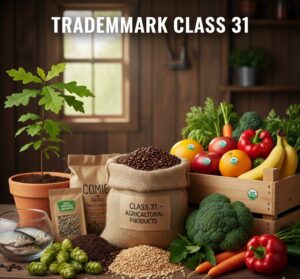
How to Register Under Trademark Class 31 in India?
Your hard work in agriculture, horticulture, forestry, or livestock deserves recognition and legal protection. Registering under Trademark Class 31 ensures your brand, logo, and products are uniquely yours. It stops others from copying your identity and helps your business stand out in a crowded market. Follow these steps to secure your brand efficiently and confidently:
Step 1: Choose a unique Brand Name and Logo
- “Select a brand name that sticks in the mind, rolls off the tongue, and stands out from the crowd.”
- “Avoid using common industry words such as ‘Fruits’ or ‘Grains’ in isolation; without a unique prefix or suffix, these terms are difficult to trademark.”
- Design a logo that clearly represents your products and stands out in the agricultural or horticultural market.
- “Whether you specialize in farm-fresh produce, heirloom seeds, or high-quality livestock, ensure your branding communicates the unique value of your agricultural products.”
Step 2: Conduct a Trademark Search
- Check the Indian Trademark Registry online for existing trademarks under Class 31.
- If you plan to sell internationally, search WIPO’s global database as well.
- Look for similar names, logos, or product designs to avoid conflicts.
Tip: Use Filingsindia free online trademark search tool to check if your desired name or logo is available.
Step 3: Submit Your Trademark Application for Agricultural Goods
Complete your online trademark filing through the Controller General of Patents, Designs, and Trade Marks. A successful submission requires:
- Applicant Info: Accurate contact and identity details.
- Trademark Representation: A clear visual of your name or logo.
- Product Scope: Defined goods falling under Trademark Class 31.
- Fee Payment: Proof of application fee settlement. Before hitting submit, perform a final document review to ensure 100% accuracy and prevent rejection.
| File your application | Complete your online trademark registration | Hits the “how-to” search intent. |
| CGPDTM portal | Official IP India e-filing gateway | Uses the terms people actually search for. |
| List of products | Class 31 goods and services | Uses the specific legal classification code. |
| Double-check | Verify for compliance | Sounds more professional and authoritative. |
Step 4: Managing the Trademark Examination & Objection Phase
Once submitted, the Registry of Trademarks will audit your application for legal compliance. If the examiner finds a conflicting mark or an incomplete filing, they will issue an Examination Report.
- Address Objections Promptly: You must submit a formal response to trademark objections within the statutory deadline (typically 30 days).
- Defend Your Mark: Provide legal arguments or evidence to resolve inconsistencies or similarities with existing brands.
- Avoid Abandonment: Failure to reply within the 1–3 month window will lead to your application being marked as “Abandoned” by the CGPDTM.
| Trademark office reviews | Trademark Examination process | Uses the technical industry term. |
| Similar trademark exists | Conflicting or deceptive similarity | Targets legal search queries. |
| Queries or objections | Trademark Examination Report | This is the specific document name. |
| Application abandoned | Lapsed or Abandoned status | Matches common user anxiety/searches. |
- Journal Advertisement: Your logo or brand name is published for public scrutiny.
- Monitor for Disputes: Stay alert for any trademark infringement claims filed by competitors.
- Final Clearance: If the four-month period passes without a challenge, your mark is cleared for the Grant of Registration.
Step 6: Obtaining Your Official Trademark Registration Certificate
Once your application clears the opposition period, the Registrar of Trademarks issues your formal Registration Certificate. This document is your primary legal tool for brand protection in Class 31:
- Exclusive Ownership: You gain the sole legal right to use the trademark for your specific agricultural, horticultural, or livestock products.
- Enforcement Power: The certificate empowers you to take legal action against trademark infringement and stop imitators from using your brand identity.
- Asset Value: Your registered mark becomes an intangible asset, increasing the market value of your farming or nursery business.
Step 7: Trademark Renewal and Long-Term Maintenance
Securing your trademark is only the beginning. To ensure your brand remains protected indefinitely, you must manage its lifecycle:
- Display Your Authority: Once registered, transition from “TM” to the ® symbol. This alerts the public of your exclusive legal rights and acts as a deterrent against brand theft.
- 10-Year Validity: Your trademark is valid for a decade. To prevent your status from lapsing, file for trademark renewal every 10 years.
- Renewal Window: You can file a Form TM-R up to one year before the expiry date to ensure uninterrupted protection for your agricultural or livestock brand.
Pro Tips for Securing Your Agricultural Brand in Class 31 Protecting your brand goes beyond a single application. Follow these industry best practices to ensure your intellectual property remains an asset:
- Perform a Comprehensive Trademark Search: Before filing, conduct a thorough Class 31 trademark availability search to avoid legal conflicts with existing seeds, crops, or livestock brands.
- Maintain a Digital IP Audit Trail: Keep a centralized record of all CGPDTM filings, examination reports, and registration certificates for future audits or legal disputes.
- Expand Your Trademark Portfolio: If your business grows to include processed foods or retail services, consider multi-class trademark registration (e.g., Class 29 for meat or Class 35 for retail stores).
- Leverage Expert Legal Counsel: For complex trademark opposition cases, consult a professional firm like Filings India to navigate the legal intricacies of the IP India portal.
- Active Brand Monitoring: Regularly scan the Trademark Journal and market listings to detect and stop trademark infringement before it dilutes your brand value.
Ready to Secure Your Agricultural Legacy? Don’t leave your brand to chance. Secure your Class 31 trademark today with FilingsIndia. From comprehensive searches to final registration, we help your business grow with legal confidence. [Contact our Trademark Experts Today!]
| Stage of the Product | Relevant Trademark Class | Primary Focus | Practical Example (The Apple) |
| Cultivation & Care | Class 44 | Professional services like crop dusting, garden design, or farming advice. | A consultant advising a farmer on how to grow organic Honeycrisp apples. |
| Raw Materials | Class 31 | Unprocessed goods in their natural state. | The raw, freshly picked apples sold in bulk or at a farm stand. |
| Processed (Plant) | Class 30 | Food of plant origin that has been prepared or flavored. | Dried apple chips, apple-filled pastries, or apple-flavored tea. |
| Processed (Animal/Oils) | Class 29 | Preserved, dried, and cooked goods (meat, fish, oils, and jams). | Apple jam, apple-infused cooking oil, or pre-cut apple slices in a sealed tub. |
| Liquid Form | Class 32 | Non-alcoholic beverages and juices. | Bottled apple juice or sparkling apple cider (non-alcoholic). |
| Fermented Form | Class 33 | Alcoholic beverages (excluding beer). | Hard apple cider or apple brandy. |
| Retail & Sales | Class 35 | The service of selling the products (stores, websites, marketplaces). | The “Apple Valley” retail store or website that sells all of the above. |
Frequently Asked Questions: Trademark Class 31
- What is Trademark Class 31?
Trademark Class 31 is an international classification (Nice Classification) for unprocessed agricultural, horticultural, and forestry products. It primarily covers items in their natural state, such as fresh fruits, vegetables, seeds, live animals, and raw animal feed.
- Why is Class 31 important for my business?
If you are a farmer, seed producer, or an agribusiness owner, Class 31 is your primary legal shield. It prevents competitors from using similar names or logos on raw produce, ensuring your brand’s reputation for quality remains protected in the market.
- Which products are covered under Class 31?
Class 31 covers a wide range of natural products, including:
- Fresh Produce: Raw fruits, vegetables, and garden herbs.
- Grains & Seeds: Unprocessed cereals and seeds for planting.
- Live Animals: Livestock, poultry, and live fish.
- Plants: Natural plants, flowers, and saplings.
- Forestry: Raw barks and unsawn timber.
- Which products are not covered under Class 31?
A common mistake is filing in Class 31 for “processed” goods.
- Class 29: For preserved, dried, or cooked fruits and vegetables (e.g., fruit jams).
- Class 30: For processed grains, flour, or baked goods.
- Class 32: For fruit juices and beverages.
- Class 5: For medicinal plants or dietary supplements.
- How do I register a Class 31 trademark in India?
At FilingsIndia, we simplify the process into four stages:
- Search: We conduct a thorough search to ensure your name is unique.
- Filing: We submit Form TM-A to the Trademark Registry.
- Examination: We handle any government queries or objections.
- Registration: Once cleared by the journal, you receive your certificate.
- How long does Class 31 trademark registration take?
While you can start using the ™ symbol within 24–48 hours of filing with us, the total time to get the ® certificate is usually 6 to 12 months, depending on government processing and whether any objections are raised.
- What are the costs of registering under Class 31?
The government fee for filing a trademark in India (as of 2026) is:
- ₹4,500 for Individuals, Startups, and MSMEs (Udyam registered).
- ₹9,000 for large companies and other entities.
- Note: Professional consultancy fees from FilingsIndia are additional and cover the search, drafting, and filing process.
- Can I register a logo under Class 31?
Yes! You can register a Word Mark (the name), a Device Mark (the logo), or both. For agricultural brands, a unique logo helps consumers identify your fresh produce quickly on shelves or in markets.
- Can I register multiple products under one Class 31 trademark?
Yes. You can include a variety of products (e.g., seeds, fresh vegetables, and live poultry) under a single application in Class 31, as long as they all fall within that specific class. There is no extra government fee for adding more items within the same class.
- How do I maintain and renew a Class 31 trademark?
A trademark is valid for 10 years. To keep it active, you must file a renewal (Form TM-R) every 10 years. FilingsIndia provides automated tracking to ensure you never miss a renewal deadline and your agricultural brand remains protected indefinitely.
Ready to Protect Your Brand?
Contact FilingsIndia today for a free trademark availability search. 📞 Phone/WhatsApp: +91 6398729258 📧 Email: info@filingsindia.in
